Blog

REVOCATION OF GN SAVINGS AND LOANS LICENSE WAS BASED ON SOUND JUDGMENT – BERNARD OTABIL

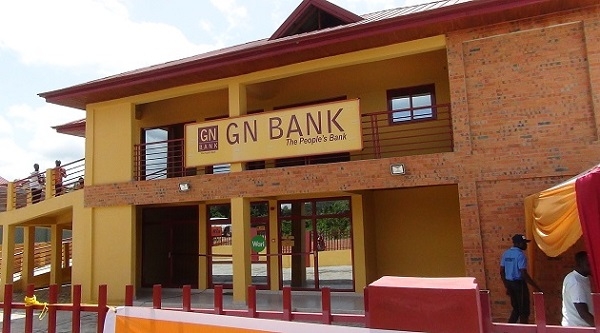
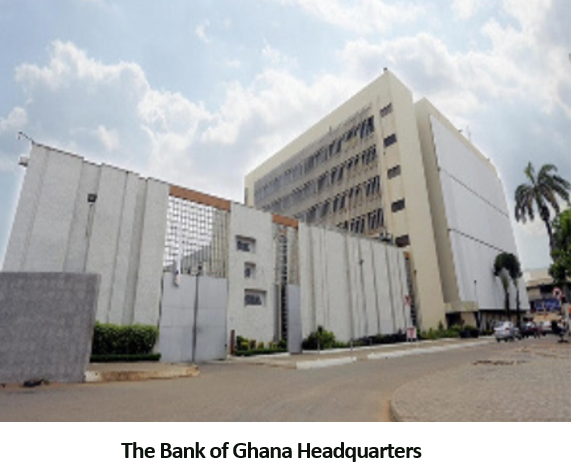
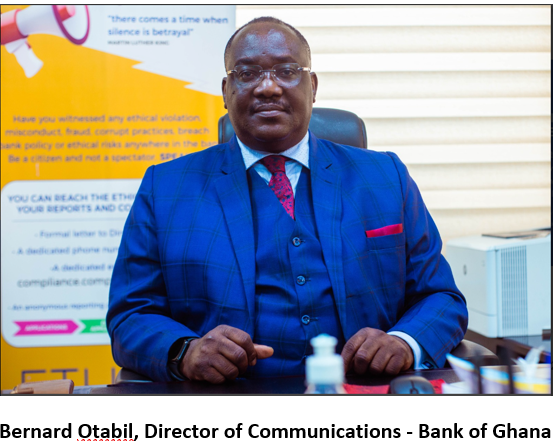
The Director of Communications of the Bank of Ghana (BoG) has clarified that the BoG worked closely with GN Bank during its liquidity challenges. According to him, the Central Bank also worked with GN Bank after its request to be reclassified as a Savings and Loans company. He indicated that the revocation of GN Savings and Loans’ license was based on sound judgment to protect the sanctity of the banking sector. “We tried to take our time with the case of GN Bank. When depositors started shouting all over the country because the Savings and Loans company could not meet depositors withdrawals it was time to act,” Mr Otabil said. Adding “Aside from the reported cases in the media, the Financial Stability Department of the Bank of Ghana received complaints of the company’s inability to pay their deposits on demand. To ensure an orderly exit of the company and protect the sanctity of the banking sector, the company’s license had to be withdrawn in accordance with the provisions of the Banks and Specilised Deposit-Taking Institutions, Act 2016 (Act 930)”. Mr Otabil noted that the BoG has provided details on the various infractions that led to the revocation of the license of GN Savings and Loans Company. GN Bank, unable to meet the new minimum regulatory capital requirement of GHS400 million by the end of 31 December 2018 applied to the Bank of Ghana for a reclassification to a Savings and Loans Company, a request which the Bank obliged. However, the license of the Savings and Loans Company was revoked in August 2019 when the Bank of Ghana realised that the company still had liquidity challenges with customer agitations and complaints sent to the Financial Stability Department.

William Ato Essien jailed 15 years for stealing

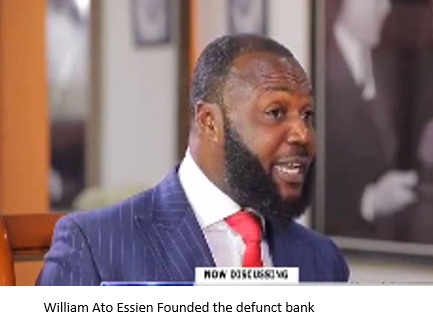
The Accra High Court has imposed a 15-year jail term on the founder of defunct Capital Bank, William Ato Essien, for stealing over GH₵90 million belonging to the bank. Essien, who was convicted in December last year for stealing over GH₵90 million belonging to Capital Bank, avoided a custodial sentence after the court accepted an agreement between him and the Attorney-General (A-G) for him (Essien) to pay the GH₵90 million as restitution to the state. In a ruling this afternoon, the court, presided over by Justice Eric Kyei Baffour, held that Essien has failed to pay the restitution to the state per the agreed terms with the A-G.

Capital Bank case: Court orders Ato Essien to pay outstanding GH¢12 million by July 27

Convicted William Ato Essien, the founder of the defunct Capital Bank has been given at least up to July 27 to redeem his first installment of GH¢20 million to the State. It has emerged in Court on Tuesday, July 4, that Mr Ato Essien has so far paid GH¢8 million of the GH¢20 million leaving an outstanding balance of GH¢12 million. Essien last year entered into an agreement with the state under section 35 of the Courts Act and was asked to pay GH¢60 million in three installments of GH¢20 million to the state. But, records available since the deadline of the first installment on April 28, he has only paid GH¢8 million as at today July 4. Before Justice Erich Kyei Baffour, a Justice of the Court of Appeal, sitting as an additional High Court judge, his lawyers represented by Baffour Gyau Bonsu Ashia request more time. The Prosecution led by Deputy Attorney General Alfred Tuah Yeboah wondered how much more time he desired to pay despite not meeting the deadline. Justice Kyei Baffour after listening to the parties urged Ato Essien to settle at least the balance of the outstanding GH¢12 million by July 27, 2023. The court said it will apply the sanctions should he fail to do so. “The convict (Ato Essien) has only made GH¢2 million payment since the last adjournment leaving an amount of GH¢12 million that should have been redeemed at least by today (July 4), 2023. “Based on the pleas of his counsel, I once again reluctantly give the convict one more opportunity to make payment. “I will adjourn to July 27, 2023, for the amount of GH¢12 million to be paid by the convict,” Justice Eric Kyei Baffour stated. According to EIB network’s Legal Affairs Correspondent, Murtala Inusah, the court turned a request from his counsel to move a Viva Voce argument to his passport which is in the custody of the court to be released in other for him to embark on a business venture to mobilize funds.

SUIT AGAINST BOG OVER REVOCATION OF TI MICROFINANCE’ LICENSE DISMISSED

The Court of Appeal has dismissed an application challenging the revocation of the operating license of a defunct microfinance company, TI Microfinance Limited, by the Bank of Ghana (BoG). The court in a unanimous decision was of the view that the judicial review application filed before the High Court was wrong in law. The court gave the decision after it upheld an appeal by BoG challenging the decision by the High Court not to grant a preliminary legal objection against the judicial review application. Founder of TI Microfinance Limited, Emmanuel Babuboa, filed an application for certiorari at the High Court urging the court to quash the decision of the BoG to revoke the operating license of the company. According to him, the Central Bank revoked the license of the financial company without any notice in conformity with Section 16 of Act 930.

Court ‘frees’ Defunct Capital Bank founder William Ato Essien

William Ato Essien, the founder of the defunct Capital Bank, who was standing trial for stealing GH¢192.5 million of depositors’ funds, has avoided a custodial sentence.  Essien avoided prison today (December 13, 2022) after the court, presided over by Justice Eric Kyei Baffour, accepted an agreement between him (Essien) and the prosecution for Essien to pay GH¢90 million as restitution to the the state. As part of the agreement, Essien pleaded guilty to 16 counts of stealing and money laundering and was accordingly convicted. Reports indicate that the other accused persons – Fitzgerald Odonkor – a former MD of Capital Bank and Tettey Nettey, the CEO of a company said to be controlled by Essien, were acquitted and discharged after they were found not guilty. As part of the agreement, Essien who pleaded guilty to stealing GH¢192.5million of depositors’ funds, has already paid GH¢30m to the state and will pay the remaining GH¢60m in GH¢20m in three instalments by the close of 2023. The presiding judge accepted the agreement pursuant to Section 35 of the Courts Act, 1993 (Act 459), which allows accused persons standing trial for causing financial loss to the state to pay the money and possibly avoid a custodial sentence. Consequences Per the orders of the court, in the event, Essien defaults in paying the money by the exact timelines (first on April 28, 2023, second on August 31 and last on December 15, 2023) he will be sentenced to prison. Justice Kyei Baffour also ordered that by virtue of pleading guilty, Essien cannot be appointed as a director of any bank or any financial institution pursuant to the Banking and Specialised Deposit-Taking Institutions Act , 2016 (Act 930). The judge also ordered the Registrar of the court to seize the passport of Essien until the convict finished paying the money. Justice Kyei Baffour who initially rejected the agreement, accepted it today after it was explained to him that the state had already recovered GH¢101.2m of the GH¢192.5m with the remaining amount being GH¢92.5m Also, it came out that an amount of GH¢35m was repeated twice on the charge sheet, meaning Essien actually has GH¢57.5m to pay , meaning the GH¢90m being paid by him was in excess of GH¢32m, which will be interest on the amount to the state. Justice Kyei Baffour accepted the agreement after listening to submissions from a Deputy Attorney -General , Alfred Tuah Yeboah and lawyer for Essien , Thaddeus Sory.

Banking sector clean-up: Former BoG staff, UT Bank executives facing several charges

Two former officials of the Bank of Ghana, alongside three other executives of defunct UT Bank are facing different types of charges in an Accra High Court (Commercial Division) over their purported roles leading up to the collapse of the bank. According to the charge sheet filed at the High Court, former second Deputy Governor, Dr. Johnson Asiama and former Head, Banking Supervision Department, Raymond Amanfu, have been charged with willfully causing financial loss to the state. Also, Head of Treasury of the UT Bank, Catherine Johnson; former Chief Executive Officer of UT Bank, Prince Kofi Amoabeng; and Robert Kwesi Armah, General Manager of Corporate Banking of UT Bank and UT Holdings – the parent company of UT Bank, have been charged with various offenses such as dishonest appropriation of US$7million and other deposits of customers and fraudulent breach of trust, among other charges. The trial judge is His Lordship Justice Bright Mensah, a Justice of the Court of Appeal, sitting as an additional High Court judge. So far, the prosecution has called Eric Nana Nipah, the Receiver of UT Bank (in receivership), Stephen Afotey, Registrar of the High Court (Commercial Division) and Stephen Antwi-Assimeng, a former Chief Executive Officer (CEO) of the defunct UT Bank to testify on its behalf. In his testimony, the first Prosecution Witness, Eric Nana Nipah, informed the Court that several investments placed by various companies such as, SSNIT SOS Fund, Forestry Commission, ECG Staff Fund, WAICA-Re and the National Communications Authority with UT Bank were moved out to UT Holdings without proper authorization. He testified that UT Holdings is not licensed to engage in such investment activities. The total amounts invested with UT Bank but transferred to UT Holdings without proper authorization is GH¢51.3million and US$8.7million. The second Prosecution Witness, Mr. Afotey, testified that an amount of US$7 million was deposited with UT Bank on the instructions of the Court. However, this amount could not be traced when UT Bank was taken over by GCB Bank. In November, the Court heard the testimony of the third Prosecution Witness, Stephen Antwi-Assimeng, the Chief Executive Officer of UT Bank at the time of the revocation of its license. He testified that UT Bank was already on liquidity support from BoG at the time he joined the bank. Mr. Antwi-Assimeng intimated that UT Bank relied heavily on borrowing from BoG to deal with its liquidity challenges. In his testimony, Mr. Antwi-Assimeng indicated that UT Bank established letters of credit in the total sum of GH¢141million for some customers of the bank and these letters of credit were maturing in May and July of 2016. He further informed the Court that the customers did not provide funds for the Letters of Credit and neither did UT Bank have liquidity on maturity. Testifying further, Mr. Antwi-Assimeng stated that the bank had situations where a number of international lenders were calling in their loans because UT Bank had defaulted and some of the loans had reached maturity. He testified further that UT Bank was experiencing an average of GH¢40million loss of customer deposits, one of the bank’s key sources of liquidity. This, according to him, resulted in acute liquidity shortage, with UT Bank forced to pay higher interest rates to attract new depositors. Proceeding further, Mr. Antwi-Assimeng informed the Court that UT Bank, on application to BoG, received liquidity support of GH¢460million with the instruction not to use any part of the additional liquidity support for unapproved purposes. He also informed the Court that the bank also applied to BOG for an unsecured liquidity support of GH¢30million. He explained that UT Bank applied for the unsecured liquidity support because it did not have adequate securities to provide collateral for this facility. The matter has been adjourned for further hearing in mid-December this year.

Capital Bank Trial: Court Rejects Ato Essien’s GHS90M Repayment Deal with State Prosecutors

The High Court presided over by Justice Eric Kyei Baffour has rejected a settlement deal between state prosecutors and embattled founder of now-defunct Capital Bank, Ato Essien. According to the settlement arrangement submitted on Wednesday to the court, a day before the advertised judgement day, Ato Essien had agreed to change his plea to guilty and will refund GH¢90 million to the state in place of a custodial sentence if found guilty. The court could not deliver its judgement in the case on Thursday due to the new development. Justice Eric Kyei Baffour, a Justice of Appeal, sitting as an additional High Court Judge, rejected the agreement, indicating that the amount agreed to be paid was not good enough, and adjourned the case to December 13 for the parties to address the court on the legal basis of the terms of the agreement. Ato Essien and two others have been on trial for the past three years for their involvement in the collapse of Capital Bank. The prosecution had also accused Mr. Essien of misappropriating GH¢620 million liquidity support extended by the Bank of Ghana to help keep the bank afloat. The prosecution and the accused in arriving at the agreement told the court they came under section 35 of the Courts Act, 1993, Act 459 (as amended). The provision states as follows: “(1) Where a person is charged with an offence before the High Court or a Regional Tribunal, the commission of which has caused economic loss, harm or damage to the State or any State agency, the accused may inform the prosecutor whether the accused admits the offence and is willing to offer compensation or make restitution and reparation for the loss, harm or damage caused.”   Justice Kyei Baffour was sceptical about the application of section 35 of the Courts Act to the present case, as he noted that monies involved belonged to depositors and shareholders of the defunct bank and not the state per se. By the proposed agreement, Mr. Essien agreed to pay GH₵90 million in total: GH₵30 million today and GH₵60 million by instalment to the state. But the court was unhappy with the arrangement. The judge also thought that the timing for the announcement of the deal was not the best, as he was ready to deliver his judgement. Background Mr. Essien is standing trial together with the former Managing Director of the Bank, Rev. Fitzgerald Odonkor, and a former Managing Director of MC Management Service, Tetteh Nettey, also owned by Mr. Ato Essien. Together, they were tried on 23 counts of criminality, including conspiracy to steal and stealing in connection with the collapse of Capital Bank in 2017. They however pleaded not guilty to the charges and maintained their innocence all throughout the trial, with Mr. Ato Essien maintaining at all material moments that he had Board approval for all actions he took. Section 35 of the Courts Act, 1993 (Act 459) (1) Where a person is charged with an offence before the High Court or a Regional Tribunal, the commission of which has caused economic loss, harm or damage to the State or any State agency, the accused may inform the prosecutor whether the accused admits the offence and is willing to offer compensation or make restitution and reparation for the loss, harm or damage caused.  (2) Where an accused makes an offer of compensation or restitution and reparation, the prosecutor shall consider if the offer is acceptable to the prosecution.  (3) If the offer is not acceptable to the prosecution the case before the Court shall proceed.  (4) If the offer is acceptable to the prosecution, the prosecutor shall in the presence of the accused, inform the Court which shall consider if the offer of compensation or restitution and reparation is satisfactory.  (5) Where the Court considers the offer to be satisfactory, the Court shall accept a plea of guilty from the accused and convict the accused on his own plea, and in lieu of passing sentence on the accused, make an order for the accused to pay compensation or make restitution and reparation.  (6) An order of the Court under subsection (5) shall be subject to such conditions as the Court may direct.  (7) Where a person convicted under this section defaults in the payment of any money required of the person under this section or fails to fulfil any condition imposed by the Court under subsection (6), any amount outstanding shall become due and payable and upon failure to make the payment, the Court shall proceed to pass a custodial sentence on the accused. [As substituted by the Courts (Amendment) Act, 2002 (Act 620), s.4]

Sale of Landed Properties

Pursuant to Section 123 (1) of the Banks and Specialised Deposit-Taking Institutions Act, 2016 (Act 930) (“the Act”), Bank of Ghana (“BoG”) on 31 May 2019 and 16 August 2019 revoked