
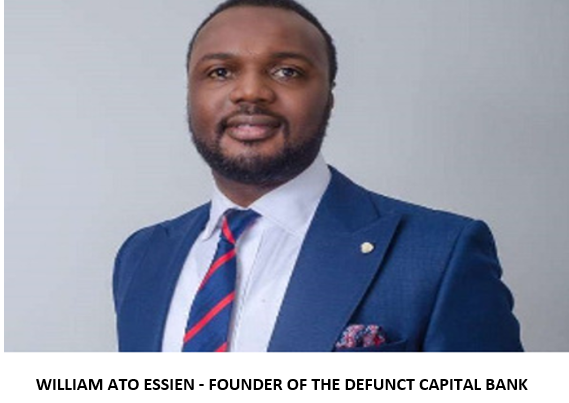
The Commercial Division of the Accra High Court has dismissed an application by the Founder of the defunct Capital Bank, William Ato Essien, which sought to halt his trial pending a review of the court’s ruling against a submission of no case. The court, presided over by Justice Eric Kyei-Bafffour, a Justice of the Court of Appeal sitting as High Court judge, ruled last Thursday that the application for stay of proceedings did not demonstrate any exceptional circumstance for the court of halt the trial. Essien, together with Fitzgerald Odonkor, the Managing Director of the bank, and Tetteh Netrtey, the Managing Director of MC Management Services, a company said to be owned by Essien, have been accused of conniving to steal GH₵620 million liquidity support given to the defunct Capital Bank by the Bank of Ghana (BoG). They have pleaded not guilty to all the charges of stealing, abetment of stealing, conspiracy to steal and money laundering. No Case After the prosecution brought its case to a close, lawyers for the accused persons in June this year filed a submission of no case in line with Section 173 of the Criminal and Other Offences (Procedure) Act, 1960 (Act 30). However, the court on July 8, this year, ruled that the prosecution was able to establish a prima facie case against the accused persons, and, therefore, ordered them to open their defence. On July 22, 2020, counsel for Essien, Mr Baffour Gyawu Ashia Bansu, notified the court about the stay of proceedings pending his application for review at the Court of Appeal. Mr. Bonsu, who moved the motion in court, argued that exceptional circumstances exist in his client’s application because there was a “viable chance of the success” of his clients; appeal at the appellate court. “My Lord, what we are saying is that the grounds of appeal as contained in the application raises very serious and fundamental issues to be determined by the appellate court. “We are saying that exceptional circumstances exist in this particular instance, reason being that there is a viable chance of the success of applicant’s appeal,” counsel said. Application opposed A Chief State Attorney, Ms Marina Appiah Opare, however, opposed the application and urged the court to dismiss it, urged the court to dismiss it, arguing her position on three grounds. She said the appeal had no chance of success, that the applicant had not demonstrated any exceptional circumstance to warrant the grant of stay of proceedings, and then that the application for stay of proceedings, when granted, would delay the trial by affecting the other accused persons in the case. Justice Kyei-Baffour subsequently ruled that the applicant failed to demonstrate that further hearing of the suit would gravely infringe on his rights. “Besides, reading the application together with the affidavit, and examining the whole processes, the court can only state that the chance of success of the applicant at the appellate court is very bleak, and on that score I find no justification or compelling reason to grant this application. Same is declined,” he said. The court adjourned the case to October 14, 2021, for the accused persons to open their defence. Background Capital Bank was once of the first banks that collapsed after a clean-up of financial institutions started by the BoG in 2017. On August 14, 2017, its license and that of UT Bank were revoked after the BoG declared them insolvent. The BoG allowed the state-owned GCB Bank to acquire the two banks in order to protect depositors’ funds and also to enable them to stay afloat.

IN THE MATTER OF THE BANKS AND SPECIALISED DEPOSIT-TAKING INSTITUTIONS ACT, 2016 (ACT 930) IN THE MATTER OF THE RECEIVERSHIP OF PREMIUM BANK GHANA LIMITED (IN RECEIVERSHIP) AND HERITAGE BANK GHANA LIMITED (IN RECEIVERSHIP) NOTICE TO THE GENERAL PUBLIC SALE OF VEHICLES AND CHATTELS OF PREMIUM BANK GHANA LIMITED (IN RECEIVERSHIP) (“PREMIUM”) AND HERITAGE BANK LIMITED (IN RECEIVERSHIP) (“HERITAGE”) Pursuant to section 123 (1) and section 16(1) (a) (7) and (8) of the Banks and Specialised Deposit-Taking Institutions Act, 2016 (Act 930) (“the Act”), Bank of Ghana (“BoG”) on 4 January 2019 revoked the operating license of Premium and Heritage respectively and in accordance with Section 123(2) of the Act appointed Vish Ashiagbor, Director of PricewaterhouseCoopers Ghana Limited (“PwC”), as the Receiver for the purposes of winding down the affairs of Premium and Heritage. The Receiver wishes to inform the general public that he is requesting firm bids from potential buyers to acquire Premium and Heritage’s chattels located at Premium DR Warehouse, Plot LI 23A Tema Motorway Industrial Area, behind Sintex Polytank Industry, Spintex Road as well as the following vehicles located at former Head Office of Premium, No 5 2nd Ringway Estates, Osu-Accra: 2 Mitsubishi Pajeros (2016 Models) 1 Honda City (2017 Model) and 1 Toyota Hilux (2014 Model) Interested parties who want to inspect the chattels and motor vehicles or have enquires should kindly contact Naa Dzadzama Quao at PwC Tower, A4 Rangoon Lane, Cantonments, or call 0302761500. All bids are to be submitted on or before 4pm on Monday 19 July 2021. Interested bidders should submit their bids in a signed and dated formal letter to the following address: The Receiver Premium Bank (In Receivership) No 5 2nd Ringway Estates Osu, Accra The Receiver Heritage Bank (In Receivership) No 5 2nd Ringway Estates Osu, Accra Attention: Naa Dzadzama Quao SIGNED VISH ASHIAGBOR RECEIVER
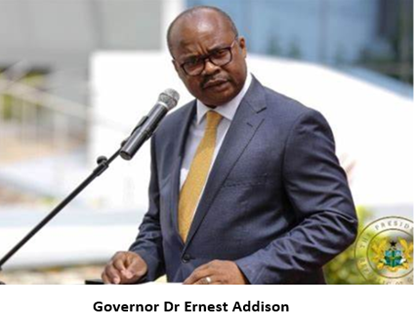
Governor of the Bank of Ghana, Dr. Ernest Addison, has provided a detail response to the reason the Central Bank will not be appearing before a Parliamentary Committee to answer a petition by some shareholders of defunct UT Bank and unibank. According to him, one of the major reasons is to allow the legal proceedings to flow smoothly, since some of the shareholders have already slowed the process with many counter suits. Speaking at the Ghana Chamber of Commerce and Industries Business Forum, Dr. Addison said “running to parliament to seek redress for the revocation of an institution’s licence is not one of the processes laid down under the law for those who feel aggrieved by a licence revocation by the Bank of Ghana. There are already a number of actions filed in court and at arbitration by the same persons who run to parliament for cover up and the Bank of Ghana simple response to parliament is respectfully to allow the pending legal processes to run their course.” “Indeed sometimes in September 2018, the 7th Parliament undertook a formal inquiry into the financial sector clean up, the key factors that led to it and the manner in which it was carried out. Among other things to appear before it and to answer specific questions aimed at assisting the committee to understand the events surrounding the cleanup exercise. The Bank of Ghana cooperated fully with the committee and provided all the necessary information to assist its members reach their own conclusions”, he further noted. Dr. Addison explained that the Central Bank had hoped the committee would have made available its report to Parliament and the public after deliberations, but nothing was heard. He called for public support for the receivers to be able to retrieve all properties of the defunct financial firms, as well as the government, to recover the over ¢19 billion bailout fund used to settle depositors funds. The Governor also used the opportunity to request the Finance Committee of Parliament to make public its investigative report on the banking sector clean up exercise, which was conducted in 2018. Timing of banking cleanup apt The Governor also used the opportunity to clarify assertions that the timing of banking cleanup was not the best, saying, “the timing of the clean-up and reforms could not have been better, and there is no doubt in the minds of any well-meaning Ghanaian, of the criticality of the reforms in the banking sector in anchoring the economic transformation and re-vitalization agenda of the government.” Covid-19 regulator reliefs The Governor also said the COVID-19 related regulatory reliefs and policy measures have continued to support lending activities in the banking sector. However, in response to the crisis, Dr. Addison said there was substantial paying down of debt incurred before the crisis by the private sector in tandem with rapid growth in issuance of new loans. From the beginning of the year to April 2021, new advances totalled ¢10.5 billion, marginally lower than the advances of ¢10.9 billion during the same period in 2020. Due to weakened demand conditions, and the substantial paydown of debt (about GH¢36.0 billion in 2020 and GH¢15.0 billion during the first five months of 2021), Dr. Addison said annual growth in private sector credit was 6.9 percent as at April 2021, compared with 17.9% recorded in April 2020. It is expected that as the economic activity rebounds and lending rates drop further, private sector credit will pick up. Businesses must take advantage of new norms Dr. Addison also urged businesses to take advantage of demographics, values and changes in technology, and identify new opportunities. “The opportunities from the extent of digital penetration in Ghana must be identified with high level of internet subscribers and wireless subscribers. Technological innovation can for example enhance agricultural productivity through the use of GIS information to undertake precision farming. Technology such as digitisation of medical records and remote diagnosis of diseases also has potential for the health services sector. Indeed, the impact of technology in promoting financial inclusion using digital technology is another example of how technology can help create new opportunities”, he added. President of the Ghana Chamber of Commerce and Industries, Clement Osei Amoako in a speech expressed confidence that members of the business community are ready to support government’s economic revitalization programme. The theme for the forum was “Redefining business success “the path for business value, resilience and sustainability.”
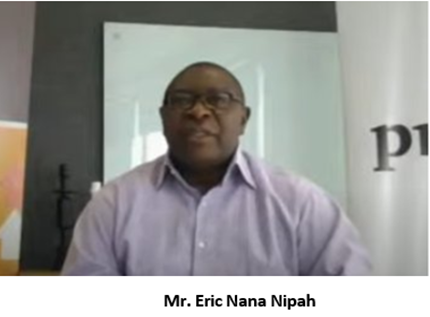
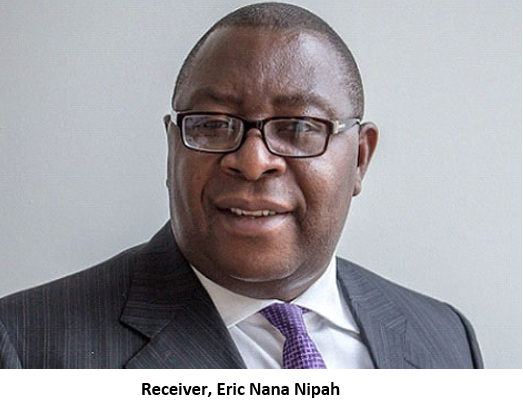
The Joint Receiver of the collapse Banks and Microfinance institutions has revealed that some customers are yet to receive their monies. According to Mr Eric Nipa, some customers sent in their claims late while others had no information to validate their claims because their institutions had already collapsed before the revocation of license. Hence, when the government released GH₵6.5billion, it was for the payment of depositors’ claims that had already been validated, he said. “When I was made, for example, receiver of the 347 microfinance institutions, there were 155 of this Microfinance which ceased to operate way before the revocation of their licenses, and so many of them do not have records, till this day we cannot locate those records.” “What typically happens in that situation is that within 90 days of the company being placed into receivership, you are supposed to have submitted your claims, based on which I would review, validate and approve these claims and then admit them,” the Director of PricewaterhouseCoopers (PwC) said. https://www.youtube.com/watch?v=6J5aErNPRBg&t=14s His comment comes after the Bank of Ghana revoked the class 1 banking licenses of nine banks, some microfinance institutions, and savings and loans companies during the financial sector clean-up. The move led to depositors’ funds being locked up. The Consolidated Bank Ghana (CBG) which is a merger of the collapsed banks was subsequently established. In 2020, the deputy Finance Minister said that more than 96% of depositors who had their monies locked-up from the banking sector clean-up “have been paid in full.” Charles Adu Boahen said 20% of the monies were paid in cash while 80% was paid in bonds. “The bonds were structured to pay out over four years,” he told MPs during the debate on the mid-year Budget Review in Parliament on July 28, 2020. But speaking on JoyNews, Mr. Nipa told Samson Lardy Anyenini, on Newsfile, that there is currently an excess of over GH₵1 billion that needs to be paid to depositors who submitted their claims after the deadline on July 4th 2020. He explained that he does not have the money to pay the depositors, however, he is putting together a report to the Bank of Ghana and the Ministry of Finance to consider supplementary payment. The PwC Director said that the payment of the funds, financed by the government, is part of the bailout scheme it set up to help clean the banking sector. Meanwhile, the Finance Minister Ken Ofori-Atta, in March 2020 revealed that the banking sector cleanup saved about 4.5 million customers of affected institutions from losing their deposits. He, however, revealed that a total of GH₵ 21billion was spent on the exercise. “We think we have done the best that the country deserves and the results show that we have a much stronger banking sector now than we had in 2017,” he said.
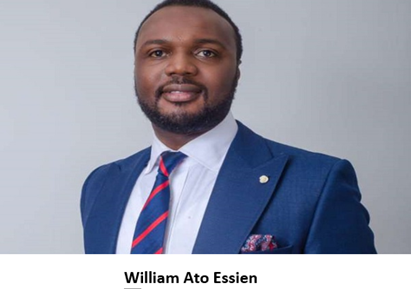
The Accra High Court will on July 8, this year, rule on a submission of “no case” filed by the Founder of the defunct Capital Bank, William Ato Essien, and three others accused of stealing depositors’ funds leading to the collapse of the bank. The other accused persons are the then Managing Director of the bank, Fitzgerald Odonkor, and Tettey Nettey, the Managing Director of MC Management Services, a company said to be owned by Essien, and Kate Quartey-Papafio, a businesswoman. After the prosecution brought its case to a close, lawyers for the accused persons indicated to the court that their clients would formally apply to the court to discharge them by filing a submission of no case in line with Section 173 of the Criminal and Other Offences (Procedure) Act, 1960 (Act 30). Extension of time When the case was called yesterday, it came up that only lawyers for Odonkor and Quartey-Papafio had filed their respective submissions of no case although the deadline set by the court which was May 25, this year. Counsel for Essien, Mr Baffour Gyawu Ashia Bonsu, informed the court that he had a little challenge so could only file his client’s submission of no case last Wednesday. For his part, counsel for Nettey, Mr Addo Atuah, pleaded with the court to give him an extension of time to file, arguing that there was a mix-up with the date. The presiding judge, Justice Eric Kyei Baffour, a Justice of the Court of Appeal sitting as a High Court judge, initially declined counsel’s request, but eventually agreed. “I graciously grant extension of time for counsel for the second accused to file the written submission of no case by June 15, 2021. The Republic is to file a response to all the submissions by June 18, 2021,” he ruled. Justice Kyei Baffour then fixed July 8 for the ruling of the submission of no case. Not guilty The four accused persons have pleaded not guilty to various counts of stealing, abetment to stealing, conspiracy to steal and money laundering. State prosecutors have accused them of engaging in various illegal acts that led to the dissipation of the GH¢620 million liquidity support given to Capital Bank by the Bank of Ghana (BoG) between June 2015 and November 2016. It is the case of the prosecution that Essien, with Odonkor’s aid, transferred the liquidity support to certain companies either controlled by him or in which he had interest. According to the prosecution, GH¢130 million of the liquidity support was transferred to MC Management Services, which was later presented to the BoG as the initial capital to set up Sovereign Bank, another bank in which Essien supposedly had an interest. The prosecution further alleged that between June and October 2015, Essien, aided by Odonkor, appropriated GH¢c27.5 million of the liquidity support by carrying it in jute bags. “The money was purportedly used as payment for business promotion,” the prosecution said. With regard to Quartey-Papafio, the prosecution said as part of the scheme to further dissipate the GH¢620 million liquidity support, Essien transferred GH¢70 million of the money into Quartey-Papafio’s bank account at Cal Bank. The prosecution accused Quartey-Papafio of trying to withdraw the money in 2017 even though she was aware that Capital Bank had collapsed and was in receivership. Revocation of licence Capital Bank was one of the first banks that collapsed after a massive clean-up of financial institutions by the Bank of Ghana started in 2017. On August 14, 2017, its licence and that of UT Bank were revoked by the BoG after it had declared them insolvent. The BoG allowed the state-owned bank, GCB Bank, to acquire the two banks in order to protect depositors’ funds and to also enable them to stay afloat. The hurricane that swept through the banking sector due to the collapse of the two banks further heightened in August 2018 when the central bank collapsed five other indigenous banks and merged them into one entity, known as Consolidated Bank Ghana.

The Bank of Ghana (BoG) has insisted that it would not appear before a parliamentary committee probing into the circumstances surrounding the revocation of licences of uniBank Ghana Limited and UT Bank Limited, which became insolvent. The committee was set up by the Speaker of Parliament, Alban Bagbin, in late March, 2021, following petitions presented to Parliament by former Minister of Finance and founder of the defunct uniBank, Dr. Kwabena Duffuor, and his counterpart for the defunct UT Bank Limited, Prince Kofi Amoabeng, through NDC MP Mahama Ayariga. The central bank has written to the committee saying that Dr. Duffuor and Mr. Amoabeng are trying to use the back door to review the decision it took against them for breaching banking rules. The BoG wrote through their lawyers, Bentsi-Enchill Letsa and Ankomah, explaining that the petitioners, are seeking to procure the legislature to review decisions of the central bank, saying that the decisions were taken according to its statutory powers under the Banks and Specialised Deposit Taking Institutions Act, 2016 (Act 930). According to the central bank lawyers, the appropriate forum to seek redress has been spelt out in the law and did not understand why Dr. Duffuor and Mr. Amoabeng would not use those platforms to seek redress. Channels For Grievance “The BSDTI Act provides how persons who are aggrieved with such decisions may seek redress for their grievances, and the prescribed resolution mechanisms do not include recourse to Parliament,” the central bank stated. The central bank insisted that Dr. Duffuor and Mr. Amoabeng in petitioning the Speaker of Parliament are in essence asking the legislature to instruct the BoG in its constitutional mandate of promoting economic development and the efficient operation of a banking and credit system in the country. The central bank said what the petitioners are urging Parliament to do is contrary to section 3 (2) and section 4 (1A) of the Bank of Ghana Act, 2002 (Act 613). Heated Debate On March 30, 2021, Mr. Bagbin constituted a nine-member committee headed by First Deputy Speaker Joseph Osei-Wusu, aka Joe Wise, to consider the petitions presented to Parliament by Dr. Duffuor and Mr. Amoabeng. It was a revision of his earlier directive for the setting up of a seven-member committee to go into the petitions alleging disregard to the rules of administrative justice by the BoG and the Ghana Stock Exchange in revoking their banking licences. The two petitioners, whose insolvent financial institutions were taken over by the state as part of the banking sector clean up exercise in 2017, have been calling for investigation into the actions of the regulators. Ayariga Link Dr. Duffuor and Mr. Amoabeng on March 23, 2021, laid their separate petitions before the House through the NDC MP for Bawku Central, Mahama Ayariga, on the dictates of Order 76 (1) of the Standing Orders of Parliament. Mr. Bagbin then proceeded to propose the setting up of a seven-member committee to go into the petitions, ruling that his admission of the petitions did not contravene the rule on sub-judice. Committee Members He added that, in consultation with leadership, he composed the nine-member committee to be chaired by the MP for Bekwai and First Deputy Speaker, Joseph Osei-Wusu, with others, including Alexander Afenyo-Markin (Deputy Majority Leader and NPP MP for Effutu), Joe Ghartey (NPP MP for Essikado-Ketan), Patrick Yaw Boamah (NPP MP for Okaikoi Central), and Samuel Atta- Akyea (NPP MP for Abuakwa South). The rest are James Klutse Avedzi (NDC MP for Ketu North), Cassiel Ato Forson (NDC MP for Ajumako-Enyan-Esiam), Isaac Adongo (NDC MP for Bolgatanga Central) and Elizabeth Ofosu-Adjare (NDC MP for Techiman North). Majority Protest Prior to the admission of the petitions, some members of the Majority Caucus kicked against the parliamentary probe, citing the rule on sub-judice since the issues were subject matters before the courts. The Majority Leader, Osei Kyei-Mensah-Bonsu, in particular, had argued it was wrong for Parliament to consider the petitions and requested the Speaker to reconsider his ruling to admit the petitions. However, Mr. Bagbin, justifying his decision, ruled that the admission of the petitions did not contravene any law or provisions of the Standing Orders of Parliament, and that it was in accord to parliamentary practice. Main Petition Dr. Duffuor and Mr. Amoabeng wanted Parliament to investigate what they considered to be a disregard to the rules of administrative justice guaranteed under Article 23 of the 1992 Constitution and recommend that their banks should be given back to them. The calling for the probe is being done at the time their respective cases are undergoing both civil and criminal trials in court. Dr. Duffuor wants Parliament, in particular, to investigate the conduct of the central bank in respect of the takeover and appointment of an official administrator for uniBank Ghana Limited as well as the circumstances surrounding the revocation of the banking licence of the bank. Mr. Amoabeng, on the other hand, wants the legislative arm to investigate the conduct of the BoG and the GSE for the revocation of UT Bank’s licence and delisting the bank. According to Mr. Amoabeng, the revocation of UT Bank’s licence and the delisting of the bank from the stock exchange amounted to a conduct “without due regard to the rules of administrative justice guaranteed under Article 23 of the 1992 Constitution.” Amoabeng Interview Interestingly, Mr. Amoabeng is on record to have said that high levels of non-performing loans and thievery by some staff collapsed his bank. The central bank cited weak supervisory standards, breaches, operational weakness and persistent liquidity challenges in its cash reserve requirements as some of the reasons for the takeover, while management of UT Bank was accused of mishandling depositors’ cash by engaging in fictitious and unlawful activities.
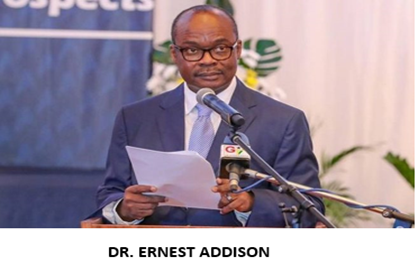
After spending some GH¢25billion of taxpayers’ money to settle depositors of various financial institutions in a radical clean-up, only GH¢1.7billion of that cash has been recovered so far in almost four years since the beginning of that exercise – a situation the regulator has blamed on slow processes of the judicial system. According to data from the Bank of Ghana, as of March 2021 only GH¢1.5billion had been recovered from the banking sector; GH¢132.1million from the savings and loans sector; GH¢77.1million from finance houses; GH¢33.5million from micro-finance institutions; and more than GH¢870,000 from micro credit companies. The amount recovered represents just 6.8 percent of the total money spent on the clean-up programme. Meanwhile, information from the Governor of the central bank, Dr. Ernest Addison, indicates government spent some GH¢25billion in cleaning up the sector and paying depositors their funds which were locked up with the defunct financial institutions; but progress made in recovering that colossal amount has been very disappointing due to the judicial system’s slowness. “We are very far from the target. If we have been able to recover just about 7 percent of the work that is done, then it is not encouraging. Part of this problem is what’s going on in our courts; things are not moving as quickly as one would have expected,” he told journalists at a press conference in Accra. To make up for the losses, government has introduced a new tax for the banking industry this year, known as the financial sector clean-up levy, which is a 5 percent levy on profit before tax of banks – a move that was met with high resistance from the Ghana Association of Bankers but to no avail. “The financial sector clean-up and the refund of monies to depositors have restored investor confidence and protected the hard-earned savings of millions of Ghanaians. However, this has come at a huge cost to government. Government will therefore introduce a financial sector clean-up levy of 5 percent on profit-before-tax of banks to help defray outstanding commitments in the sector. The levy will be reviewed in 2024,” the budget statement stated. Background of the financial sector clean-up On August 14, 2017, Ghanaians woke up to the shocking news that two local financial institutions, UT and Capital Banks, had their licenses revoked by the Bank of Ghana, as their financial statements showed the two banks were living dead (insolvent). Then a year after, in August 2018, seven other banks – uniBank, Beige Bank, The Royal Bank, Construction Bank and Sovereign Bank – were also declared insolvent and had their licenses revoked. Again, the regulator cracked the whip on Heritage Bank and Premium Bank in January 2019, with the former said to have obtained its license through fraudulent means and the latter also declared insolvent. All these banks’ assets, with the exception of UT and Capital Banks which were taken over by the GCB Bank, have been transferred to the Consolidated Bank Ghana Ltd. The show did not end there: in March 2019, the Bank of Ghana further revoked the licenses of 347 microfinance companies which were declared insolvent. Then in August the same year, 23 Savings and Loans companies also had their licenses revoked. These actions, according to Finance Minister Ken Ofori-Atta, have cost government some GH¢13.6billion. Besides this, a further GH¢5billion has also been spent on the President’s directives to fully pay all depositors whose funds were locked up with the failed SDIs and MFIs; and an additional GH¢3.1billion has also been spent on supporting investors in failed asset management companies regulated by the Securities and Exchange Commission (SEC).
The Receiver of the defunct 23 Savings and Loans Companies and 347 Microfinance Companies wishes to notify all Depositors and Other Creditors who are yet to file their claims to complete the attached Proof of Debt (PoD) forms and send together with all supporting documents to the following email addresses: All completed PoD forms for the Savings and Loans in Receivership should be sent to: gh_receivership23savingsandloans@pwc.com and deborah.obodai@pwc.com All completed PoD forms for the Microfinance Companies in receivership should be sent to: gh_receivership347microfinance@pwc.com and deborah.obodai@pwc.com Kindly deliver the hard/original copy to the following address: The Receiver,54 Olusegun Obasanjo High Way,Opposite Accra Girls Senior High SchoolPMB CT42, CantonmentsAccra, Ghana Microfinance Companies – Proof of Debt Form (Depositors) Microfinance Companies – Proof of Debt Form (Other Creditors) Savings and Loans – Proof of Debt Form (Depositors) Savings and Loans -Proof of Debt Form (Other Creditors)
IN THE MATTER OF THE BANKS AND SPECIALISED DEPOSIT-TAKING INSTITUTIONS ACT, 2016 (ACT 930) ANDIN THE MATTER OF THE RECEIVERSHIPS OF THE 347 MICROFINANCE COMPANIES AND THE 23 SAVINGS & LOANS AND FINANCE HOUSE COMPANIES NOTICE TO ALL BORROWERS AND LOAN DEFAULTERS Pursuant to Section 123 (1) of the Banks and Specialised Deposit-Taking Institutions Act, 2016 (Act 930) (“the Act”), Bank of Ghana (“BoG”) on 31 May 2019 and 16 August 2019 revoked the operating licenses of 347 insolvent Microfinance Companies and 23 Savings and Loans and Finance House Companies respectively, and in accordance with Section 123(2) of the Act appointed Eric Nana Nipah, a Director of PricewaterhouseCoopers Ghana Limited (“PwC”) as the Receiver for the purposes of winding down the affairs of these Companies. Section 127 (3) of the Act mandates the Receiver to realise all assets of the resolved companies, including outstanding loans and advances, for the benefit of creditors. Accordingly, the Receiver wishes to once again notify the general public, especially persons/institutions who have outstanding loan obligations to these resolved companies to visit any of the maintained branches of these institutions for the repayment of their outstanding loans. The list of the maintained branches is shown on the adjacent table and can also be accessed on the Receiver’s website (www.ghreceiverships.com). Borrowers may also settle their outstanding obligations to the resolved companies through the respective MTN MoMo numbers and/or receivership bank accounts listed in the adjacent tables. Borrowers may also settle their outstanding obligations through the Receiver’s designated representatives/agents authorised to do so. If unsure of these designated persons/ agents, please call the Receiver’s Call Centre on 0242439441 for confirmation. The Receiver entreats all borrowers to cooperate with his agents in this regard. Borrowers are to note that the Receiver will continue to accrue interest on all their outstanding loan obligations should they fail to pay or reach a settlement agreement with the Receiver immediately. Borrowers are to note also that, the Receiver will pursue all recalcitrant defaulters through all available means as permitted by Act 930 including, but not limited to, legal actions and publishing names of recalcitrant defaulters in national and international newspapers. For further information on the Loan Repayments, please call 0242439441/ 0302960208 or send an email to: projectdomino.loans@gmail.com (for the Microfinance Companies) or projectbluemoonloans@gmail.com (for the Savings and Loans and Finance House Companies). You may also write to the; The Receiver,54 Olusegun Obasanjo High Way,Opposite Accra Girls Senior High SchoolPMB CT42, CantonmentsAccra, Ghana Thank you. SIGNED ERIC NANA NIPAH Download PDF