Blog

BOG REVOKED UNICREDIT’S LICENCE LAWFULLY

Court dismisses entire case as being without merit A Human Rights Court in Accra has ruled that the Bank of Ghana (BoG) followed due process in revoking the license of UniCredit. HODA Holdings Limited (HODA), the majority shareholder of uniCredit Ghana Limited (uniCredit), had filed a motion on notice for judicial review in the nature of certiorari to quash the notice of BoG dated August 15, 2019 declaring uniCredit insolvent and revoking its licence to operate as a specialised deposit-taking institution. In addition, HODA also prayed the Human Rights Court for an order of injunction directed at the Bank of Ghana, their agents, assigns, privies and hirelings or otherwise howsoever described from interfering with the operations of uniCredit and to refer the subject matter of the application to arbitration. After examining and evaluating the affidavits, exhibits and the various submissions by counsel for the parties, the court, presided over by Justice Gifty Agyei Addo, dismissed the entire case of HODA Holdings Limited as being without merit. Mr Frank Davies was counsel for Bank of Ghana while Mr Adu Mante was the counsel for HODA. The court, in its judgment, affirmed BoG’s resolution powers under the Banks and Specialised Deposit-Taking Institutions Act, Act 930. The court held that the steps taken by BoG in revoking the licence of uniCredit were in accordance with due process and were lawful. Reasons BoG gave for revoking uniCredit’s licence uniCredit Ghana Limited (uniCredit), formerly Kantamanto Savings and Loans Company Limited, was given an operating licence in October1995 and commenced operations on November , 1995. In 2006, the institution was acquired by the HODA Group of Companies, and subsequently its name was changed from Kantamanto Savings and Loans Limited to uniCredit Ghana Limited in March 2007. The institution is currently overexposed to a related party, uniSecurities Limited, a sister company. The institution’s inability to access its funds from uniSecurities, even though overdue, has resulted in severe liquidity challenges and its inability to meet withdrawal requests of customers. uniCredit Savings & Loans Limited was found to be insolvent with a negative capital adequacy ratio and negative net worth following the Bank of Ghana’s assessment as of December 2018. The Bank of Ghana directed the board and management of the institution to immediately inject additional capital to address the capital deficiency, but this has not been successful. The specific issues that led to the revocation of the licence of the institution included the following: GH₵221.32m negative adjusted net worth a. The institution’s adjusted net worth of negative GH₵221.32 million as at end May 2019 indicates that its paid up capital is impaired in violation of Section 28(1) Act 930. b. The institution’s adjusted capital adequacy ratio of negative 97.83% as at end May 2019 is in violation of Section 29(2) of Act 930. GH₵160.10m non-performing-related party exposures This is mainly due to the non-performing-related party exposures of GH₵160.10 million to uniSecurities, which is far in excess of its negative net worth. c. The Institution has been breaching the statutory cash reserve ratio requirement since April 2018. d. The institution is unable to meet the deposit withdrawals of customers due to its severe liquidity challenges. The Bank of Ghana has been receiving many complaints from the institution’s customers about their inability to access their funds. e. The institution has a high percentage of non-performing loans. Dr Duffuor petitions Parliament over Unibank licence revocation In a related development, Dr Duffuor, the former Finance Minister and founder of Unibank, has petitioned Parliament to investigate the central bank over the revocation of his bank’s licence. In a statement set for discussion in the House, the former governor of the central bank petitioned the legislature to investigate the conduct of BoG in the takeover. Mr Duffuor also wants an inquiry into the appointment of an Official Administrator of Unibank Ghana Limited, as well as the circumstances surrounding the revocation of the bank’s licence in 2018. He is also asking Parliament to direct the restoration of the banking licence of Unibank Ghana Limited by BoG and remedying the harms done to the shareholders’ property rights as a result of the conduct of the central bank. Dr Duffuor, the founder of Unibank in 1997 at a time when he was BoG Governor, also wants Parliament to give any other directives it deems fit. The bank was put into administration by the BoG in 2018 and then consolidated with four other defunct banks during Ghana’s banking crisis.
AUCTION SALES! AUCTION SALES!! AUCTION SALES!!!

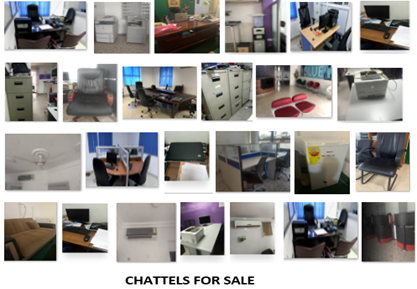
AUCTION SALES! AUCTION SALES!! AUCTION SALES!!! A consortium of Auctioneers (Wildos Mart, Broadway Mart, and Yakamata Mart) appointed by the Receiver of the resolved 347 Microfinance Companies (“MFIs”) and the 23 Savings & Loans and Finance House Companies (“S&Ls”) wishes to inform the general public of an auction sale of the chattels of the resolved companies. The sale of the chattels of the resolved MFIs and S&Ls will be conducted at the respective branches of the resolved MFIs and 23 S&Ls across the 16 regions from Monday 8 March 2021 until all items are sold out. Chattels to be auctioned include air conditioners – split/window, desk-top computers, fridges, water dispensers, swivel chairs, executive office tables/chairs, leather sofas, couches, flat screen television sets and generators. All interested buyers may contact any of the appointed auctioneers whose details are shown in the table below, or the Receiver’s representative on 0247143593/0202731441, if any further information is required: AUCTIONEER CONTACT Wildos Mart 0244381303 Broadway Mart 0246004242 Yakamata Mart 0243668984 Conditions and Payment Modalities:       Strictly Cash down at the fall of the gavel or item will be re-auctioned. “As is where is” Highest bidder shall be the purchaser.

ENSURE PERPETRATORS OF COLLAPSED BANKS FACE THE LAW IN SECOND TENURE – BOG GOVERNOR URGED

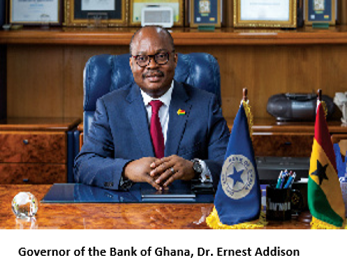
Banking Consultant, Nana Otuo Acheampong has admonished Governor of the Bank of Ghana, Dr Ernest Addison, to ensure during his second tenure that persons behind the collapse of indigenous Ghanaian banks in 2017 face the law. According to him, many depositors of these collapsed banks are still faced with uncertainties and hardship as a result of the collapse. In an interaction with Citi Business News, Nana Otuo Acheampong pointed out that though some owners and managers of insolvent banks have been charged and granted bail by a court, it is still not enough. “On resolving the banks that had toxic loans, people are still waiting for some answers as to what happens to those who caused those toxic loans to be contracted in the first place,” he stressed. “We know that one or two people are already in court, but is that all? For those in court, how soon are we going to see results? So those are some of the tasks he has ahead of him or he should have on his desk to attend to,” Otuo Acheampong lamented. The renowned banking consultant urged the governor to commit time and resources towards expediting the process leading to the apprehension of all persons involved in the ruin of banks. In 2017 banks such as UT Bank, UniBank, Royal, Construction, Beige, Sovereign, Heritage and Premium banks had their licenses revoked and subsequently consolidated into one bank. Two others were also handed over to the Ghana Commercial Bank. The regulatory crackdown of these collapsed banks was based on poor business practices and weak capital positions resulting in a series of market exits.

NOTICE TO THE GENERAL PUBLIC – SALE OF LANDED PROPERTIES

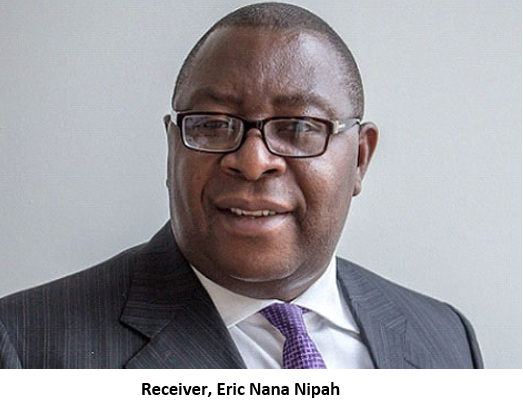
IN THE MATTER OF THE BANKS AND SPECIALISED DEPOSIT-TAKING INSTITUTIONS ACT, 2016 (ACT 930)  IN THE MATTER OF THE RECEIVERSHIPS OF THE 347 MICROFINANCE COMPANIES AND THE 23 SAVINGS & LOANS AND FINANCE HOUSE COMPANIES NOTICE TO THE GENERAL PUBLIC SALE OF LANDED PROPERTIES As you may be aware, pursuant to Section 123 (1) of the Banks and Specialised Deposit-Taking Institutions Act, 2016 (Act 930), Bank of Ghana (“BoG”) on 31 May 2019 and 16 August 2019 revoked the operating licenses of 347 insolvent Microfinance Companies and 23 Savings & Loans and Finance House Companies respectively. BoG in accordance with Section 123(2) of the Banks and Specialised Deposit-Taking Institutions Act, 2016 (Act 930) appointed Eric Nana Nipah, a Director of PricewaterhouseCoopers Ghana Limited (“PwC”), as the Receiver for the purposes of winding down the affairs of these institutions. A key component of the Receiver’s mandate is to secure all assets of the resolved companies and maximise their realisations for the benefit of creditors. Accordingly, the Receiver wishes to inform the general public that he is requesting for firm bids from potential buyers to acquire some Landed Properties of the resolved companies for his evaluation. Potential bidders who want to inspect the Properties or have enquires may visit the receivership website on www.ghreceiverships.com or contact the Receiver’s representative Michael Vondee on michael.nat007@gmail.com or 0244977797 to reserve an inspection appointment. Details of the condition for the sale of these properties are set out in a sales memorandum which can be assessed on the website above. All bids are to be submitted on or before 4pm on Friday, 26 March 2021. Interested bidders should submit their bids in a signed and dated formal letter to the following address: The ReceiverNo. 54 Olusegun Obasanjo High WayOpposite Accra Girls Senior High School Accra Tel: +233 (0) 302761500Attention: Eric Nana NipahSGDERIC NANA NIPAH CLICK HERE TO DOWNLOAD SALES MEMORANDUM

GH¢21 BILLION SPENT ON BANKING SECTOR CLEAN-UP – AKUFO-ADDO

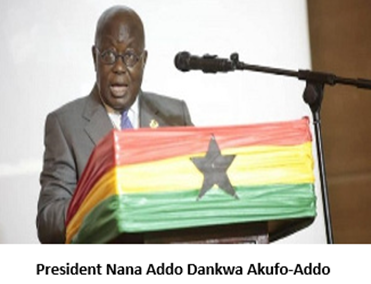
The government expended GH¢21 billion to clean up the banking sector, the President, Nana Akufo-Addo has announced. Delivering his final ‘State of the Nation’ address to the 7th Parliament, he said “an amount of GH¢21 billion was used to fund the cleaning up exercise. These are painful lessons we all have to imbibe” The Bank of Ghana embarked on a banking sector clean-up, recapitalization, and other regulatory reforms from mid-2017 to end-December 2018 in line with its mandate to promote the safety, soundness, and stability of the financial system to support economic growth. A regulatory crackdown on poor business practices and weak capital positions in Ghana’s banking sector has resulted in a series of market exits since August 2017. The outcome is a smaller but more sustainable banking industry, though this has come at a price.  A similar clean-up process, which has already resulted in hundreds of license withdrawals, has also been applied to the Microfinance and Non-Banking financial institutions sector. According to the Banking of Ghana sector report for last year, the first major assessment criteria of the reform process is the growth of the banking sector. Although the recapitalisation process scaled down the number of banks to 23 in Dec-2018 from 33 in Dec-2016, the industry’s balance sheet indicators pointed to a stronger growth performance in the key performance matrix. Growth in total assets, a key measure of the size of the banking sector, almost doubled, to 22.8 percent in 2019 from 12.3 percent in 2018, supported in part by the sustained growth in deposits since 2017, and the rapid growth recorded in 2019. From 12.7 percent in 2017, deposits growth moved up to 17.3 percent and 22.2 percent in 2018 and 2019 respectively, in recognition of the renewed and growing confidence in the banking sector following the reforms. Another positive outturn from the reforms was repositioning of the banking sector to support economic growth through intermediation. There has been a strong rebound in credit growth since the reforms took effect. Banking sector credit increased to GH¢45.2 billion in December 2019 from GH¢36.5 billion in December 2018. Growth in new advances also recovered strongly to GH¢29.7 billion during 2019 from GH¢23.3 billion in 2018. The growth in credit was broad-based across all the various economic sectors.

GH¢21 BILLION SPENT TO CLEAN UP THE FINANCIAL SECTOR – DR BAWUMIA

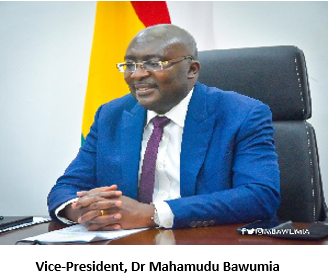
Vice-President Dr. Mahamudu Bawumia says the government has spent GH¢21billion to clean up the financial sector. He said 99 percent of depositors of the affected banks, microfinance and savings and loans companies had been fully settled. The Vice-President was speaking at the 12th Edition of the Nation Building Updates at the Cedi Conference Centre, Department of Economics, University of Ghana. The event was on the theme, “Future of Ghana’s Economy”. He added that the government on compassionate grounds had decided to pay up to GH¢50,000 to all customers of affected Fund Management Companies while the liquidation processes continued. Dr Bawumia informed that based on the validated claims, the partial bailout would result in 89 percent of the affected individuals being fully settled. He said the relatively strong performance of the economy, among other things, led to Ghana becoming the destination of choice for Foreign Direct Investments (FDI) in West Africa, according to the 2019 World Investment Report by UNCTAD. He said the strong economy built by the Government had provided space and ability to provide the basic needs for people, both as part of a broad, inclusive, transformational development strategy and also to withstand crises like COVID-19. “The shock of COVID-19 notwithstanding, the economy is bouncing back,” he added. The Vice-President said the government’s economic transformation agenda was on course. However, he added, in the next four years the government would build on the successes of their “One District, One Factory” and “Strategic Anchor Industries” policies to further enhance agro-processing. He said government would also enhance cocoa processing, add value to minerals and petrochemicals, promote labour-intensive and light manufacturing activities. “We will continue the development of the Aluminium, Iron and Steel industries along their entire value chains through GIADEC and GIISDEC, and leverage our Regional Hub status and as hosts for the Secretariat of the AfCFTA to expand our access to regional and continental markets,” he said. The Vice-President said those things were not happening in a vacuum, and more importantly, they did not happen by accident. He said rather it came from their overarching strategy to transform the structure of the economy to add value to the country’s agricultural and natural resources as well as careful planning and execution. He said the Akufo-Addo led government was also building the foundations for industrial development to ensure sustainable, long-term economic growth as well as create jobs.

COLLAPSED S&L FIRMS: GH¢2.3 BILLION OUT OF GH¢12 BILLION IN ASSETS RECOVERED – BOG

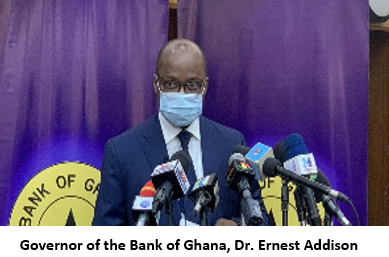
Governor of the Bank of Ghana (BoG) has revealed an amount of GH¢2.3 billion out of GH¢12 billion in assets have been recovered by the receiver of the defunct savings and loans companies. According to Ernest Addison, all depositors of collapsed banks that became insolvent due to the clean-up exercise undertaken by the BoG have been paid. “Some of the data that I have suggests that all depositors in the banking sector have been paid their locked-up funds except for those of related parties. In terms of recoveries, approximately GH¢2.3 billion out of the stock of GH¢12 billion in assets have been recovered and we still have a long to go.” Dr Ernest Addison made this known at the central bank’s last Monetary Policy Committee press conference for the year to announce its decision on the monetary policy rate ahead of the upcoming general elections. The central bank however has maintained its policy rate at 14.5 percent for a fourth consecutive time this year owing to economic growth indicators improving and reserve buffers remaining strong. Meanwhile in August 2019, the Bank of Ghana revoked the licenses of 23 insolvent Savings and Loans companies and Finance Houses after it had earlier on in May 2019 revoked the licenses of 347 microfinance companies. These actions were part of the financial sector clean-up where some financial institutions had become distressed. The decision, according to the central bank was in line with Section 123 (1) of the Banks and Specialised Deposit-Taking Institutions Act, 2016 (Act 930), which requires the Bank of Ghana to revoke the license of a Bank or Specialised Deposit-Taking Institution (SDI) where the Bank of Ghana determines that the institution is insolvent.

UT BANK COLLAPSE: EOCO TAKES OVER KOFI AMOABENG’S MANSION

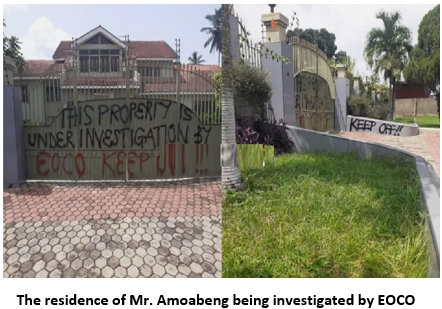
The Economic and Organised Crime Office (EOCO) has taken over a plush house of embattled former Managing Director of defunct UT Bank, Mr. Prince Kofi Amoabeng, MyNewsGh.com has confirmed. The house according to checks by this portal is located at Kukurantumi in the East Akim District of the Eastern Region. It was built 15 years ago by the businessman and former military officer. Checks by MyNewsGh.com from EOCO reveal that the latest action was taken last Friday with the explanation it is under investigation, asking the public or assignees to keep off. A notice at the entrance of the house reads “This property is under investigation by EOCO. Keep off”. Mr. Prince Kofi Amoabeng or his lawyers have declined comment on the matter but officials of EOCO, when reached by MyNewsGh.com investigations, confirmed taking over the house but declined to give further details. Background The Attorney -General (A-G) in February this year filed new charges at the Accra High Court against Prince Kofi Amoabeng, the founder of the defunct UTBank, over the collapse of the bank. The charge sheet filed at the Accra High Court named as accused persons Dr Johnson Asiama; a former 2nd Deputy Governor of the Bank of Ghana (BoG), Raymond Amanfu; a former Head of the Banking Supervision Division (BSD) of the BoG, Catherine Johnson; Head of Treasury of the UTBank, Robert Kwesi Armah; General Manager of Corporate Banking of UT Bank and UT Holdings; the parent company of UT Bank. All five have been charged by the State with forty-two (42) counts of Fraudulent Breach of Trust, Fabrication of Evidence, Deceit of Public Officer, Fraudulently Causing Financial Loss to the Republic, Contravention of the Bank of Ghana Act and Wilfully Causing Financial Loss to the Republic.

INSOLVENT SAVINGS AND LOANS COMPANIES: GH¢6.39BN CLAIMS PAID

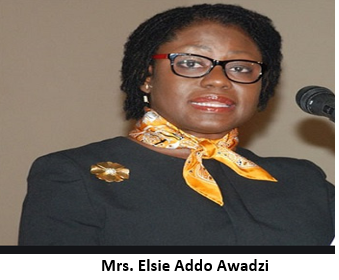
Out of GH¢ 6.5 billion in deposit claims validated by the receiver of the failed specialised deposit-taking institutions (SDIs), GH¢6.39 billion has been paid in cash to depositors, the Second Deputy Governor of the Bank of Ghana (BoG), Mrs. Elsie Addo Awadzi, has said. With that payment, she said, there was now an outstanding amount of GH¢110 million, being claims of related parties of the defunct institutions who played active roles in their management and control. “The clean-up of the SDIs sector was necessary. First of all, the law under which we regulate these institutions requires that we revoke their licenses when they are no longer able to honour their obligations to their customers,” she said at the BoG/SDI media sensitisation workshop in Accra yesterday. SDIs Savings and loans companies, finance houses and microfinance companies, together with rural and community banks, constitute the SDIs sector, which is regulated under the Banks and SDIs Act of 2016 (Act 930). The institutions have been licensed by the BoG to provide access to finance for segments of society that are not able to access financial services from commercial banks. The SDIs are expected to accept small deposits and provide small loans for micro/small businesses and informal sector business operators. Clean-up Following the clean up of the SDIs sector, there are 25 savings and loans companies, 15 finance/leasing companies, 137 microfinance companies and 144 rural and community banks currently operating. Mrs. Awadzi said although the BoG had revoked the licenses of 347 insolvent microfinance companies and 39 micro-credit companies on May 31, 2019, it was important to note that 155 microfinance and 10 micro-credit companies had already ceased operations and had been dormant for a number of years. On August 16, 2019, the BoG revoked the licences of 15 insolvent savings and loans companies and eight insolvent finance house companies. In order to mitigate the recurrence of mass failures in the SDIs sector, the bank had revamped its supervision of the sector and was working on new rules on corporate governance and risk management to guide operators in the sector. Critical stakeholders. According to Mrs Awadzi, that segment of the financial sector formed the bedrock of Ghana’s economic development that could be harnessed and nurtured to become strong economic actors. “Together, the SDIs sector has contributed significantly to our nation’s socio-economic development by serving individuals and micro, small and medium-size enterprises. But for the SDIs, a big vacuum would have existed in our financial system today,” she said. As of the end of July 2020, she said, the assets of SDIs constituted 8.47 per cent of total banking sector assets, and that their base and loans made up 7.70 per cent and 14.28 per cent, respectively, of the entire banking sector. “Savings and loans, finance house and microfinance companies currently operate through 1,070 branches nationwide, serving about 1.5 million individuals and businesses, offering thousands of jobs and providing loans for commerce and finance, salaried workers, transportation and communications, agriculture, forestry and fishing, small-scale construction, mining and manufacturing amounting to about GHc5.7 billion as of July 2020, with loan amounts per customer ranging from a little over GHc1,000 to GHc20,000 and beyond,” she said. Challenges Mrs. Awadzi said in spite of the achievements of the SDIs sector, it had faced challenges over the years, adding that “many of the microfinance companies that were licensed from 2012 were ‘grandfathered’ into the then new microfinance licensing regime, without the requisite due diligence done on them”. Several of them, she said, had operated for a number of years without regulation, and on being licensed, continued with business as usual, without complying with licensing requirements and other regulatory norms and without understanding that as financial institutions, they had to operate under prudent management and strong internal controls to ensure the safety of their depositors’ funds. Moreover, she said, a number of savings and loans companies and finance houses also strayed away from their mandates under the licenses issued by the BoG and tried to operate as banks, without the requisite amounts of capital or the expertise to manage the risks they were taking. Deposits “Instead of taking small deposits and lending small amounts of money per customer, they took on large deposits and made large loans and placed significant amounts of funds with other SDIs and related parties, with little or no prospect of getting back those funds. “Essentially, it is these factors — poor capitalisation, poor business models, poor governance and risk management and, in some cases, fraud and dishonesty — that led to many of these institutions collapsing in the last few years, starting with the famous or infamous DKM in 2016 and subsequently many more,” she said. Safety and security Mrs. Awadzi said it was important to protect depositors of the institutions whose deposits had been locked up for months and years and the public that continued to do business with those institutions without knowing their true finance condition. “The safety of the financial system was at stake, as confidence in the entire system was being eroded. The public simply did not know the difference between an SDI that was distressed and one that was not. “Once the public began to see signs of certain SDIs being unable to honour their obligations to their customers,  they started to demand a return of their deposits from other financial institutions, leading to challenges for those institutions that were otherwise strong,” she said. Clean-up saved jobs In a presentation, the Head of the Banking Supervision Division of the BoG, Mr. Osei Gyasi, said but for the clean-up, about 10,000 jobs would have been lost. For his part, the Executive Director of the Ghana Association of Savings and Loans Companies, Mr. Tweneboah Kodua Boakye, among other things, charged the media to support the growth and expansion of the sector. He said they should contact the financial institutions involved when clients lodged complaints with the media, especially regarding delayed payments, before publications.